Understanding Dissociation
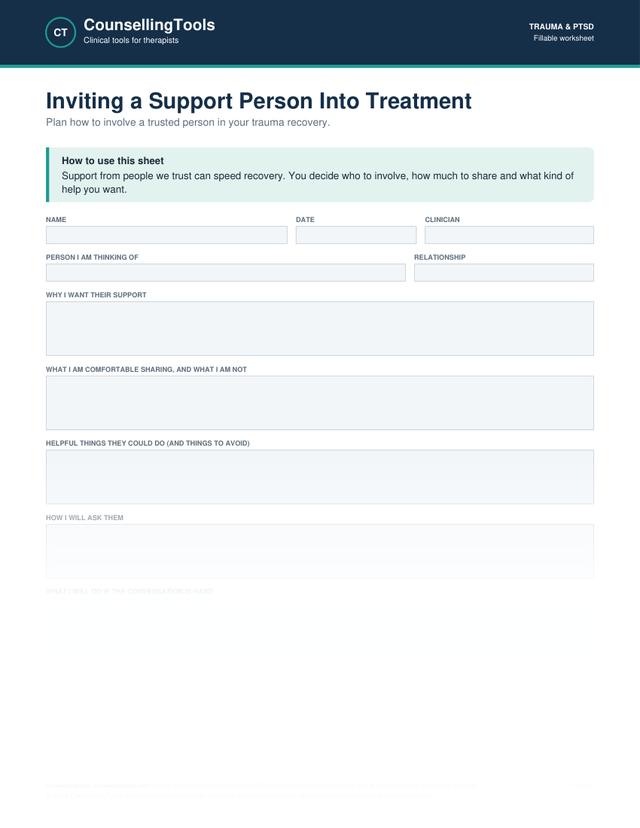
A client handout explaining dissociation as a protective response, common experiences, early warning signs, triggers and grounding strategies.
- 1 page
- Fillable on screen (12 fields)
- Prints on A4 and US Letter
Members-only download
Start a free 3-day trial to download this worksheet and up to 8 more.
Start 3-day free trialSign inThen $24.99 USD a year. Cancel any time before the trial ends and you will not be charged.
About this worksheet
Dissociation is a disconnection from thoughts, feelings, the body, surroundings or memory. Everyone dissociates a little, such as zoning out on a familiar drive. After overwhelming experiences, the mind may disconnect more strongly to protect you. It made sense then, but it can get in the way now.
How to use it with clients
- Introduce it in session. Explain why the exercise fits your client's goals and walk through the first section together.
- Fill it in on screen or on paper. The PDF has fillable fields, so clients can type into it on a computer or tablet, or you can print it.
- Set it as between-session practice. Agree when and how often your client will use it, and keep it realistic.
- Review it next time. Look at what your client noticed, what was hard, and what to try next.
- Topic
- Trauma & PTSD
- Format
- Fillable PDF, 1 page
- Paper size
- US Letter, prints cleanly on A4
- For
- Therapists, counsellors, psychologists and social workers to use with their clients
- Access
- CounsellingTools membership (3-day free trial)
- Licence
- Use with unlimited clients in your own practice. Licence terms
- Updated
- November 2026
Worksheets support professional care and do not replace clinical judgement. If a client is at risk, follow your local emergency and safety procedures.